.svg)


Brandformance: Where branding, UX and CRO work together


Strong branding can make somebody want a product before they have compared every feature or found the cheapest alternative.
It creates recognition, communicates quality and gives customers confidence in what they are buying. But branding cannot do all the work on its own. If the website is confusing, the product is difficult to find or the checkout creates uncertainty, that confidence quickly disappears.
This is where branding, user experience and conversion rate optimisation need to work together.
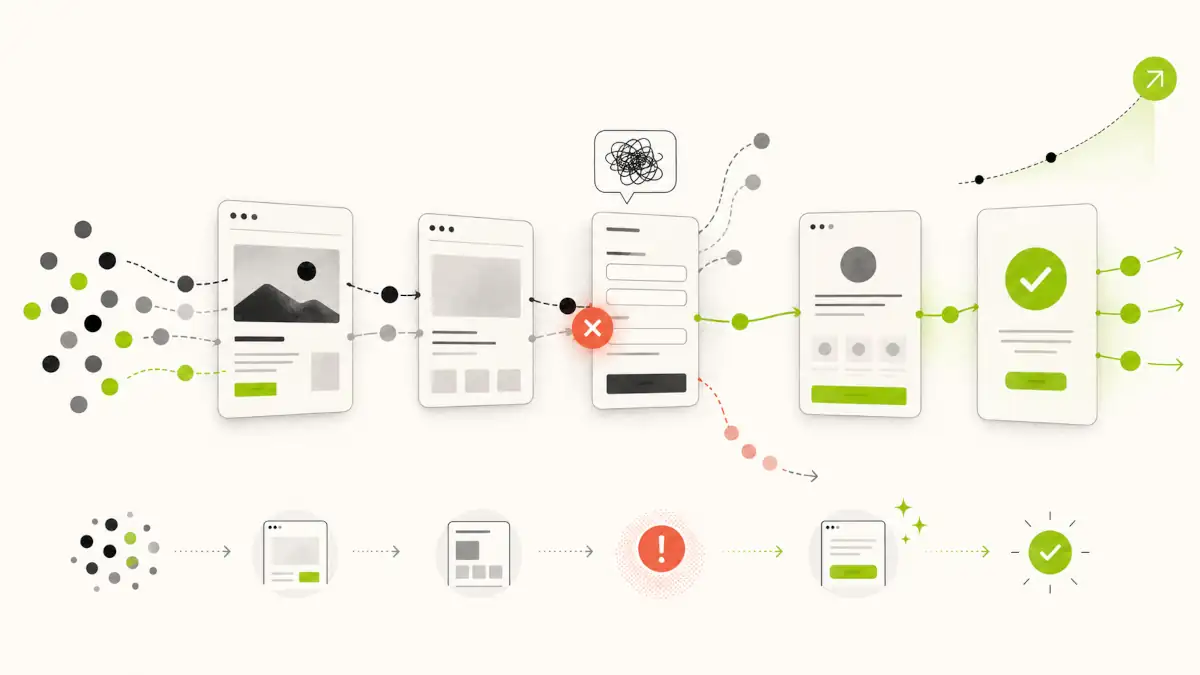
Branding creates interest and trust. UX makes the experience clear and usable. CRO measures whether the complete journey is helping more people buy, enquire or sign up.
The combination is sometimes described as **Brandformance**: bringing brand building and measurable performance together rather than treating them as competing ideas.

What does Brandformance mean?
Brand marketing and performance marketing have traditionally been treated as separate disciplines.
One creates awareness, recognition and preference. The other concentrates on measurable actions such as sales, leads and customer acquisition costs.
In reality, customers experience both at the same time. They see an advert, visit a website, compare a product, read reviews and decide whether the business feels credible. Every part of that journey affects both their perception of the brand and the likelihood of conversion.
Marketing strategist Avinash Kaushik describes effective brand marketing as human-centred and results-aware. It is a useful way to think about Brandformance. Creative work should build a strong brand, but it should also be tested, measured and connected to real customer behaviour.
This does not mean reducing branding to a conversion-rate spreadsheet. It means understanding whether the brand is creating the recognition, trust and preference it was designed to create.
Why branding affects conversion rates
Customers rarely assess every option with complete objectivity. Their decisions are influenced by familiarity, perceived quality, relevance and trust.
A strong identity can make a business feel established and distinctive before somebody has read the detail. Consistent language and visuals also reassure customers that they are still dealing with the same company as they move between an advert, social post, landing page and checkout.
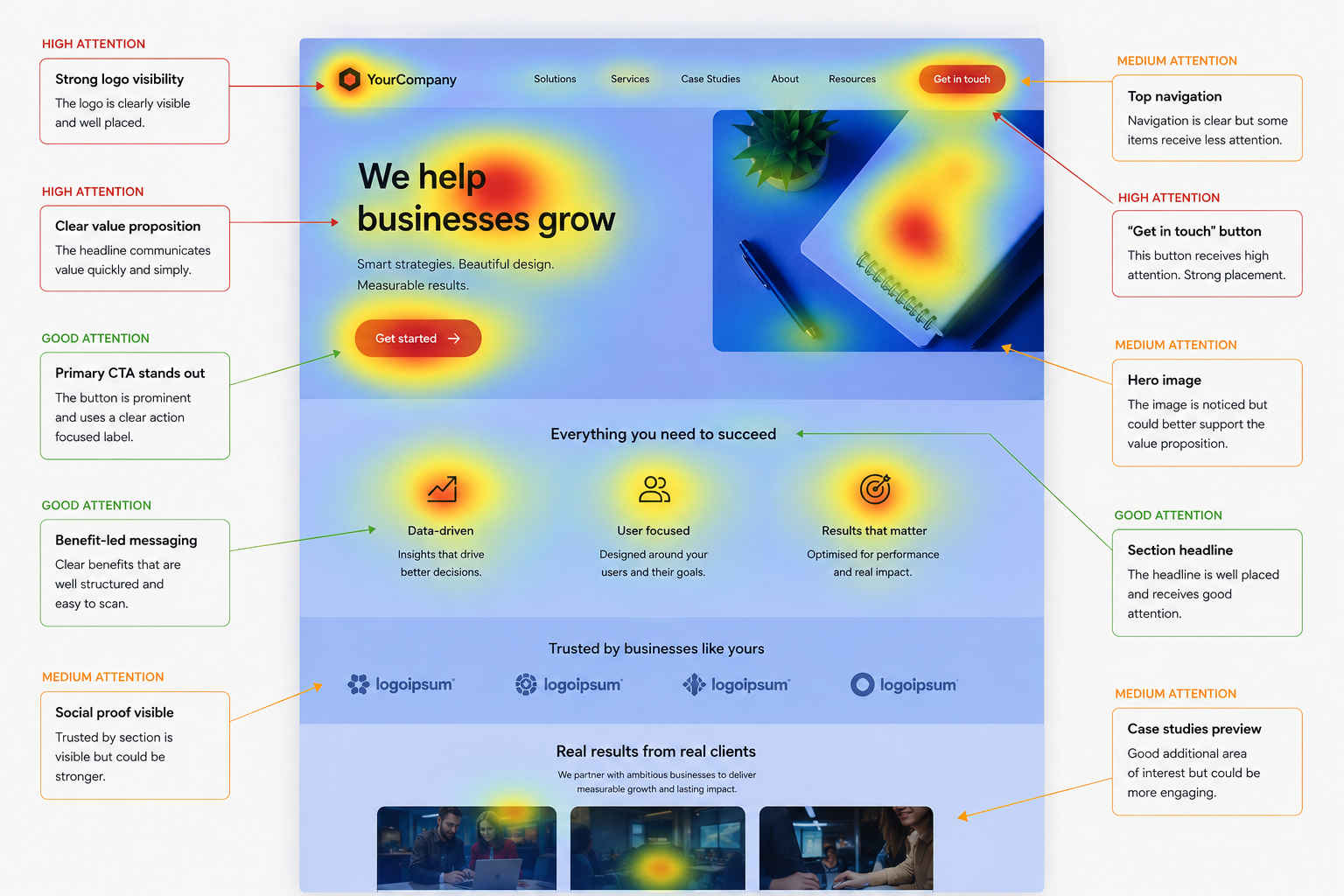
Research from Nielsen Norman Group supports the importance of that initial response. Its work on first impressions in digital design found that the immediate reaction to a website can influence perceptions of relevance, credibility and usability. Its research into trustworthy web design also identifies design quality, clear disclosure and current, comprehensive content as important credibility factors.
That makes branding part of the conversion journey. It is not a decorative layer added once the important work is finished.
A distinctive brand still needs a usable website
Great branding may persuade somebody to visit, but the experience has to deliver on the promise.
If customers cannot understand the proposition, find the right product or confidently complete a purchase, the brand has attracted attention without turning it into business.
Common problems include:
- A homepage that looks impressive but does not explain what the company sells
- Navigation structured around the business rather than the customer
- Product pages that create more questions than they answer
- Inconsistent language between advertising and the landing page
- Forms and checkouts that ask for too much information
- Important delivery, returns or pricing details appearing too late
- Generic templates that remove everything distinctive about the brand
The answer is not to strip away the personality and make every website look the same. Good UX should help customers experience the brand more clearly.
For Maveroc, a new luxury jewellery brand, the ecommerce experience needed to communicate quality from the homepage through to checkout. Visual impact mattered, but so did product discovery, trust and a purchase journey appropriate for a considered luxury purchase.
Brand, UX and ecommerce CRO were not separate tasks. They were different parts of the same customer decision.
CRO should protect the brand, not fight it
Conversion rate optimisation is sometimes associated with aggressive pop-ups, countdown timers and endless calls to action.
Those techniques may produce a short-term response, but they can also make a premium or trusted brand feel desperate. A conversion gained through pressure is not necessarily a good customer relationship.
Effective CRO starts by understanding why customers hesitate. The problem might be an unclear value proposition, weak product information, poor mobile usability, limited social proof or uncertainty about what happens next.
The improvement should remove that uncertainty while remaining consistent with the brand.
For ecommerce brand APOC, CRO insight and design refinement helped triple the conversion rate. The objective was not to replace the personality of the store with a generic high-converting template. It was to make the existing brand and shopping experience perform more effectively.
This is also why UX and CRO work well together. UX provides the research and design methods needed to understand the customer. CRO provides the commercial measures needed to judge whether changes are helping.
You can read more about where to start with conversion rate optimisation and how Higher Ground approaches copywriting for CRO.
Do not buy more traffic before fixing the journey
Increasing advertising spend is an expensive way to compensate for a website that does not convert.
SEO, paid search and social campaigns can bring more people to the site, but they cannot make an unclear proposition convincing or repair a frustrating checkout.
Before increasing traffic, ask:
- Are the right people reaching the website?
- Does the landing page continue the message that attracted them?
- Can visitors understand the proposition quickly?
- Does the brand feel credible and appropriate for the price?
- Where do customers hesitate or leave?
- Are conversions and lead quality being measured accurately?
Paid traffic can then become a useful source of evidence. Different messages, audiences and landing pages can be compared to learn what creates both interest and action.
Our article on why CRO should be part of digital marketing strategy explores this relationship in more detail.
Test the brand experience, not just the button
A/B testing can help compare headlines, layouts, product information and calls to action. But not every useful brand question needs thousands of visitors or a statistically significant experiment.
Qualitative research can reveal whether people understand and trust an experience before it is built or heavily promoted.
Useful methods include:
Five-second testing:
What do people think the business offers, and how does it make them feel?
Usability testing
Can customers find, compare and purchase the right product?
Customer interviews
What language do customers use, and what almost prevented them from buying?
Session recordings
Where do real visitors hesitate, repeat actions or abandon the journey?
On-site surveys
What information is missing at the point of decision?
Prototype testing:
Does a new journey work before development begins?
Nielsen Norman Group provides a useful guide to testing visual design, including how short first-impression tests can assess trust and visual response.
The aim is not to ask customers to design the brand for you. It is to find out whether the intended message and experience are actually reaching them.
Brandformance in practice
One of our strongest ecommerce results came from a US hunting brand with an established identity and specialist audience.
Organic search revenue increased from approximately $85,000 to $290,000 month on month using comparable traffic. The improvement did not come from choosing between branding and conversion. It came from combining a strong brand presence with clearer journeys, better UX and commercial optimisation.
The same principle applied to [Fettle](https://www.ground.co.uk/post/webflow-cro). A distinctive cycling brand needed a website that could explain the service, support expansion and turn interest into bookings. Continued Webflow, UX and CRO improvements contributed to a fourfold increase in conversions as the business grew.
These examples are different in scale and market, but the underlying process is similar:
1. Understand the customer and commercial objective.
2. Identify what the brand needs to communicate.
3. Design a clear journey around that proposition.
4. Measure how customers respond.
5. Continue improving rather than waiting for another redesign.
The brand experience continues after conversion
Brandformance does not end when the payment succeeds or the form is submitted.
Confirmation pages, emails, delivery updates, packaging, onboarding and customer support all affect whether the original brand promise feels genuine.
A polished ecommerce site followed by a vague confirmation email creates doubt. A premium service followed by a confusing onboarding process reduces confidence. Conversely, clear communication after purchase can increase satisfaction, reviews, referrals and repeat business.
For SaaS products, post-conversion UX is particularly important. Registration is only the beginning. Customers still need to understand the platform, complete onboarding and experience value before they are likely to remain subscribed.
Our guide to the business value of UX] looks at how experience design supports engagement across the wider customer journey.
Branding, UX and CRO should share the same plan
The biggest problem is often not the quality of the individual work. It is that brand, website, marketing and product teams are working towards different definitions of success.
Branding may be judged on preference and recognition. Marketing is measured through traffic and acquisition. Ecommerce teams focus on sales. Product teams look at activation and retention.
Customers do not experience those departments. They experience one business.
A joined-up plan should establish:
- The customers the business wants to attract
- The problem or value the brand should be known for
- The actions customers need to complete
- The evidence required to build confidence
- The points where users hesitate or leave
- The commercial and experience measures used to assess improvement
This creates room for distinctive creative work while ensuring it contributes to a usable and commercially effective experience.
A brand that performs
Branding creates expectation. UX determines whether the experience meets it. CRO shows where the journey can work harder.
Treating them separately can lead to a beautiful identity applied to a difficult website, or a highly optimised sales funnel that feels generic and forgettable.
Bringing them together creates something more useful: a brand customers notice, an experience they can use and a journey that produces measurable results.