.svg)


Imagine a bike hire website with thousands of visitors a month and a booking rate that barely moves. The homepage looks fine. The photography is decent. The prices are competitive. So why do so many people leave without booking?

That question is the reason UX and CRO specialists exist.
What does a UX and CRO specialist actually do?
In plain English, they work out why visitors are not becoming customers, improve the experience and prove whether the changes worked.
That means looking beyond the appearance of an individual page. A specialist needs to understand how people first discover the business, which marketing channel brings them to the website, what they expect to find when they arrive and what happens between that first page view and the final booking, purchase or enquiry.
Analytics might show that a service page receives plenty of visits but produces very few enquiries. It might reveal that paid search visitors behave differently from people arriving through organic search, social media or email. It can also show whether customers convert during their first visit or return several times before making a decision.
But numbers alone rarely explain the whole problem.
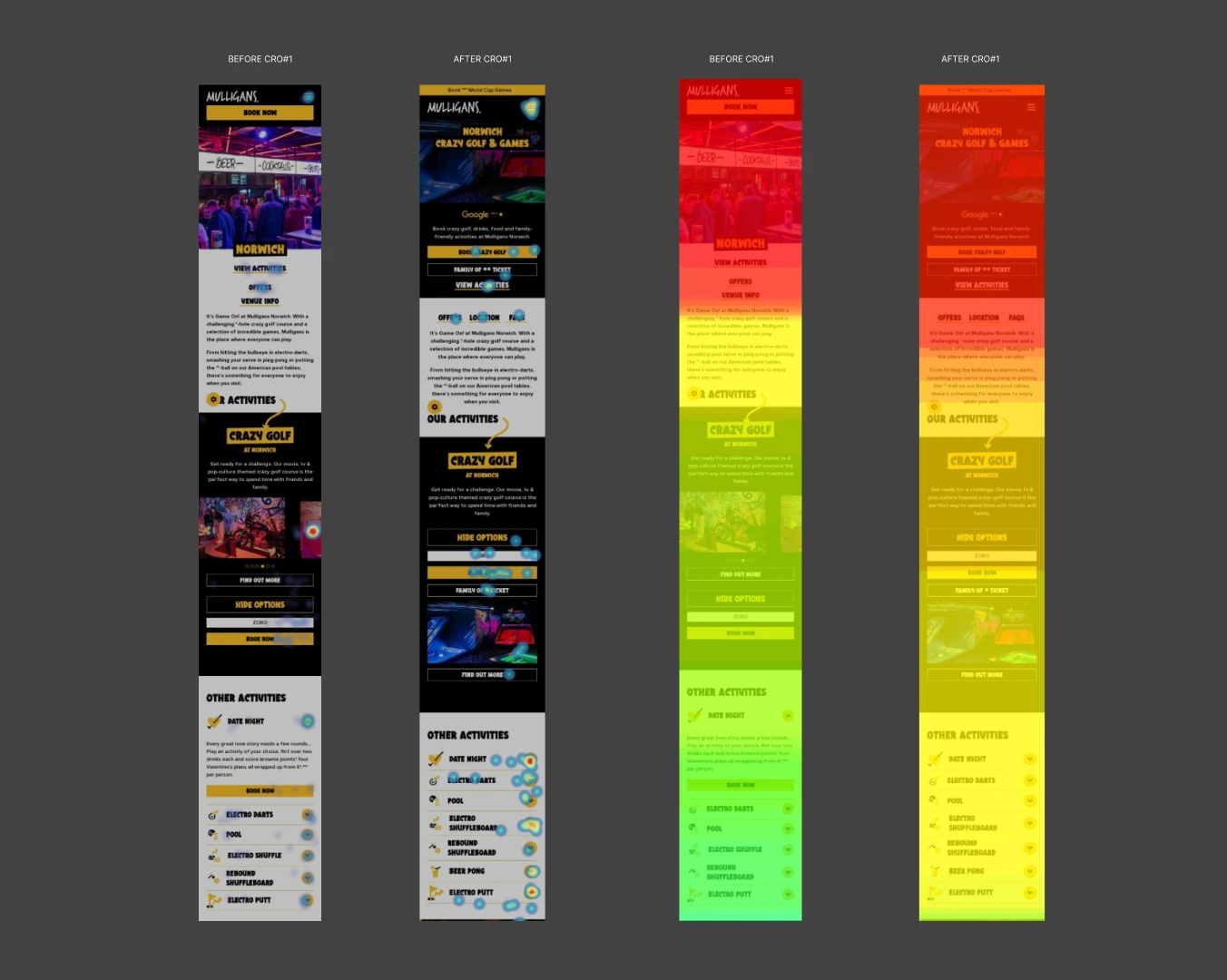
Session recordings, heatmaps, customer feedback and usability testing reveal the hesitation, confusion or missing information hidden behind the data. UX design is then used to improve the journey, while CRO provides a structured way to prioritise changes and measure their commercial effect.
As conversion specialist Paul Boag explains in his guide to conversion rate optimisation, periodic redesigns rarely solve the underlying problem. He recommends an ongoing process of deciding what to measure, discovering why people are not converting, developing possible solutions and testing them.
“The vast majority of meaningful improvements come from continual testing and iteration, not from some expert arriving, waving a magic wand, and disappearing into the sunset.”
Paul Boag
That is an important distinction. CRO is not a one-off makeover. It is a process of continuous improvement.
UX and CRO are related, but they are not the same thing
UX focuses on whether people can understand and use a website. Can they find the right product? Do they understand what they are buying? Can they complete the task without confusion or unnecessary effort?
CRO connects those questions to measurable business performance. Which pages attract valuable visitors? Where are people leaving? Which marketing channels produce bookings or qualified enquiries? What should be improved first, and how will the business know whether it worked?
CRO without UX can turn into a collection of shallow experiments, such as changing button colours, adding popups or rewriting individual calls to action.
UX without commercial measurement can produce an elegant interface without proving whether it helped the business.
A good UX agency should be able to investigate the problem and design the solution. That combination is surprisingly uncommon. Many CRO specialists can identify a weak point in the data but cannot redesign the journey. Many UX designers can improve an interface but do not measure its effect on enquiries, bookings or revenue.
Finding the problem is only half the job.
Following the journey from the marketing channel to the conversion
Page views only become useful when they are connected to visitor intent.
Someone searching Google for “family bike hire Morzine” may be comparing prices, bike sizes and availability. Someone reading an article about cycling routes may still be researching the destination. A visitor who has clicked a retargeting advert may already know the company and simply need enough reassurance to finish the booking.
These people should not necessarily receive the same message or be expected to take the same action.
The Google Analytics traffic acquisition report helps show where visits are coming from, while the landing page report connects those channels with the first page people see. This allows a specialist to examine whether the landing page matches the promise made by the search result, advert, email or social post.
That connection matters commercially.
A PPC advert might be generating plenty of traffic, but the landing page may not answer the question behind the search. An SEO article may attract a large number of page views but very few commercially relevant visitors. A service page may generate less traffic but produce a much higher proportion of qualified enquiries.
The objective is not simply to increase website traffic.
It is to attract the right people and help more of them take the right action.
“Traffic is only useful when you understand who is arriving, what they are looking for and whether the website helps them take the next step.”
Robert Hufton, Higher Ground
This is also where market strategy enters the work. A UX and CRO specialist needs to understand which audiences matter, which services are most valuable, why customers choose the business and what competitors are promising.
Without that context, conversion optimisation can improve the wrong outcome. For example, shortening a form might generate more enquiries while simultaneously reducing their quality. Sometimes an additional qualifying question produces fewer leads but considerably better commercial opportunities.
The best conversion rate is not always the highest one.
Finding the leaks in the funnel
Most commercial websites have a funnel, even if nobody has formally mapped it.
For an ecommerce business, that funnel might move from a category page to a product page, basket, checkout and completed purchase. For a service business, it might begin with a search result, continue through a service page and case study, and finish with an enquiry form or telephone call.
Google Analytics funnel exploration allows these stages to be visualised so a business can see where people succeed or abandon the journey.
Suppose 1,000 people view a product, 300 add it to their basket, 180 start the checkout and only 40 complete the purchase. The overall conversion rate tells us there is a problem, but the individual stages help locate it.
The checkout may introduce an unexpected delivery charge. Customers might be forced to create an account. The payment options may be unclear. A discount code field could send people away to search for a code. The mobile form might be difficult to complete.
The same principle applies to lead generation.
If plenty of people visit the contact page but very few start the form, the proposition or call to action may not feel convincing. If people begin the form but abandon it halfway through, it may be too long, ask difficult questions or request information before the customer is ready to provide it.
Long winded forms often reflect the organisation’s internal process rather than the customer’s immediate needs.
A business may want to collect every detail required by its sales team, but the visitor may only want to ask whether the service is suitable. Making people complete eight steps before they can have a conversation creates unnecessary friction.
This is what people mean by a leaky funnel. Potential customers are progressing towards a conversion, but the website is losing too many of them at a particular stage.
Analytics shows where. Research helps explain why.
Data can show that people abandon the third stage of a booking process. It cannot always explain whether the cause is confusing language, missing information, technical failure or a sudden loss of trust.
This is where Hotjar session recordings, heatmaps, customer interviews and usability testing become useful.
A recording might reveal visitors repeatedly clicking something that is not interactive. A heatmap could show that important booking information is being missed. Customer service enquiries may expose the same unanswered question appearing every day.
Usability testing goes one step further by allowing the team to watch genuine customers attempt the task.
Steve Krug, author of Don’t Make Me Think and Rocket Surgery Made Easy, describes the difference clearly:
“Usability tests are about watching people actually try to use what we’re building, so we can detect and fix the parts that confuse or frustrate them.”
Steve Krug
This is why a strong conversion rate optimisation process combines quantitative and qualitative evidence.
Analytics shows what happened. Research helps explain why it happened. UX design turns that understanding into a practical improvement.
A practical example: booking a family cycling holiday
A customer planning a family cycling trip needs to make several decisions.
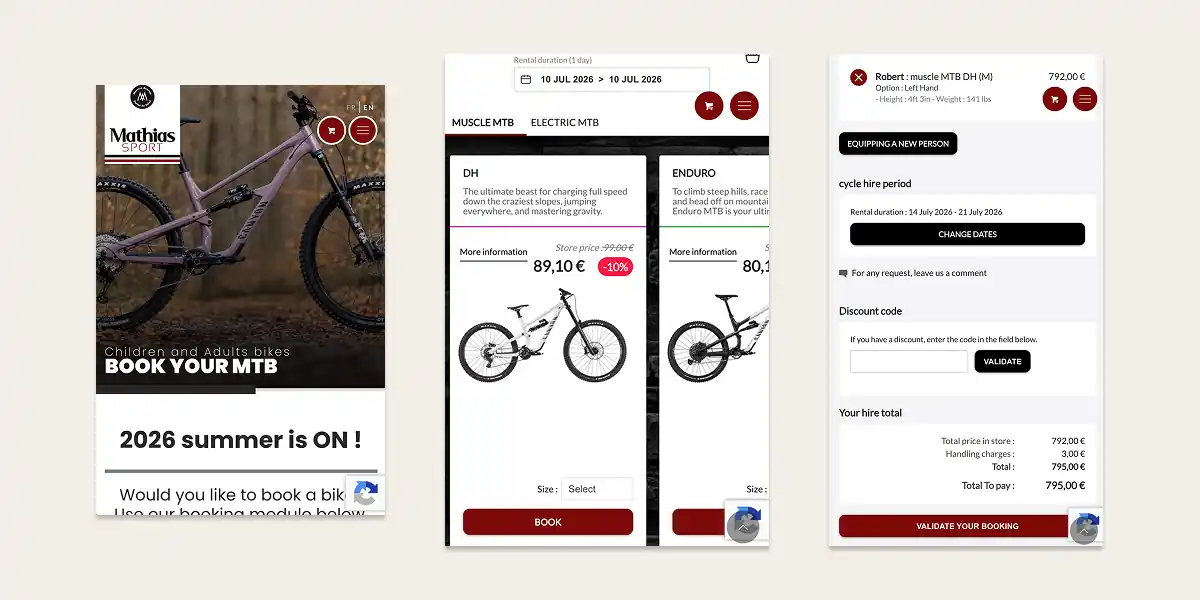
They need to choose dates, understand which bikes suit each rider, check sizes and availability, compare prices, understand insurance and cancellation terms, add equipment, arrange collection or delivery and possibly pay from another country.
A UX and CRO specialist would not simply redesign the homepage and hope for the best.
They would examine which searches and marketing channels brought customers to the website, which landing pages they first saw, how they moved into the booking journey and where they left.
Customers may be abandoning because bike categories use terminology they do not understand. Availability might appear too late. The price could change unexpectedly. The booking system may look completely different from the main website. The form could be asking for too much information or dividing a simple purchase across too many screens.
These are small, specific problems with a cumulative effect on bookings.
“The objective is not to replace technology that already works. It is to improve the experience around it, remove unnecessary obstacles and help more customers complete their booking.”
Robert Hufton, Higher Ground
Does improving UX mean replacing the whole website?
Usually, no.
A specialist may recommend restructuring an existing page, simplifying a form, improving product information or redesigning the front end around a booking engine that already works.
They may identify a poor handover between the main website and third party checkout, make availability easier to find or remove an unnecessary stage from the journey.
Paul Boag makes the same point in Why Moving Buttons Won’t Fix Your Conversion Rate. Meaningful conversion improvements require teams to examine the interface, content, customer understanding and sometimes the organisation behind the experience.
You do not need to replace everything.
You need to fix what is actually broken.
How is this different from hiring a web designer?
A web designer can produce something polished and professional. A UX and CRO specialist starts earlier, with different questions.
What is the customer trying to achieve? Which marketing message brought them here? Does the landing page meet that expectation? Where does the journey lose them? What evidence supports that conclusion? Which change should be made first? What commercial result should be measured?
UX strategist Jared Spool describes design as “the rendering of intent”.
“We discover what we want for our users, what we want for our business. We come up with our intention. And then we render that.”
Jared Spool
That idea connects UX design directly to business strategy. The interface should not simply look attractive. It should deliberately help customers complete something that matters to them and to the organisation.
That is the real difference between appearance and commercial purpose.
Can a UK specialist help an overseas business?
Yes, provided the work is grounded in genuine customer and market evidence.
Hiring a UK UX and CRO specialist does not mean replacing a local developer, moving the website or disrupting existing systems. Analytics reviews, customer interviews, journey mapping, prototyping and usability testing can all be completed remotely.
The specialist can then work with the existing marketing, development or booking-system team to implement improvements.
Distance is less important than access to reliable data, local customer knowledge and genuine users from the relevant market.
What should a business expect?
A good UX and CRO specialist should leave a business with a clearer understanding of its customers, its conversion funnel and the improvements most likely to make a commercial difference.
There should be evidence rather than unsupported opinions, practical designs rather than vague recommendations and a method for measuring what happens next.
A credible specialist will not promise a particular increase before looking at the data. Until they understand the market, traffic sources, landing pages, customer intent and existing funnel, that number would simply be a guess.
At Higher Ground, we combine analytics, Hotjar research, user testing and UX and CRO design to identify problems and design practical solutions.
No unnecessary process. No long winded presentations. Just evidence, design and continuous improvement.
The bottom line
Page views do not explain whether the right people are visiting. Conversion rates do not show where the funnel is leaking. Analytics does not always reveal why somebody became confused or abandoned a form.
A UX and CRO specialist connects all of those things.
They follow the customer from the original marketing channel to the landing page, through the website and into the final enquiry, booking or purchase. They identify where the experience is losing people, understand why it is happening and design a better route through.
That is what turns website data into useful commercial improvement.