
Specialist contractors and subcontractors across the South West have more work on offer than they've had in years. Waterproofing specialists, offsite and SIP manufacturers, EV charger installers, joiners, retrofit firms and M&E contractors are all being asked to do more. Many of their websites were built for a quieter market.
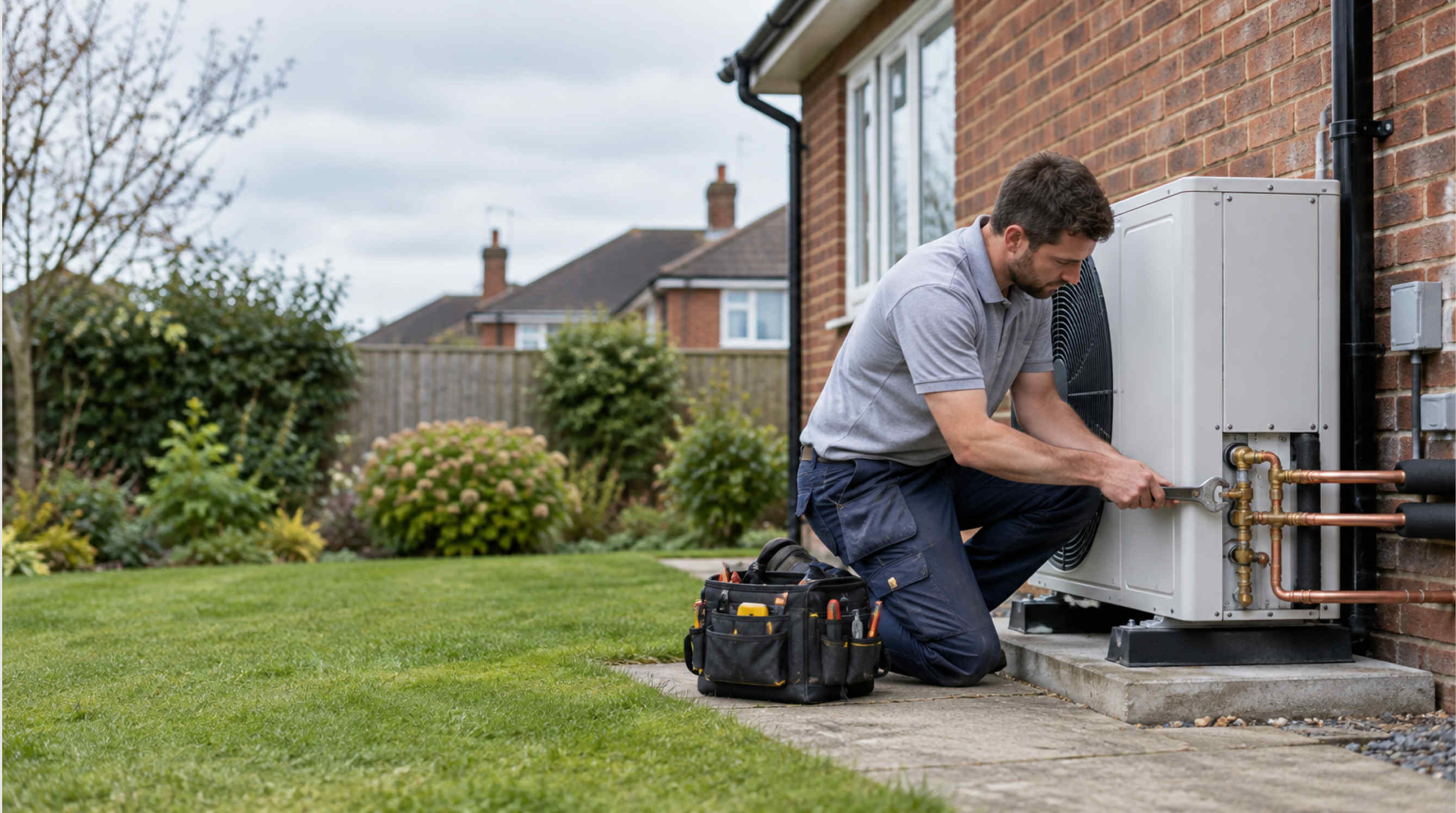
The people who find you online now ask more before they get in touch. A homeowner wants a price and to know their home is suitable. An architect wants details and standards. A main contractor wants evidence you can deliver on time and safely. Every unsuitable quote, tender or site visit costs time you don't have.
A website that sends every visitor to the same "get a quote" form fails on both counts. It loses the good enquiries and lets through the poor ones. Here is where specialist contractor websites go wrong, and what a better enquiry journey looks like.
Why your website matters more in 2027
Demand is rising across the region, funding is moving towards homeowners who pay their own way, and skilled time is the bottleneck. Together, those changes put more weight on how well your website qualifies people.
More homes, more projects. Under updated national planning policy, the housing target for Devon and Torbay is set to rise by 53%. Construction already employs over 25,000 people in the area.
More money for low-carbon upgrades. The £15bn Warm Homes Plan, published in January 2026, aims to upgrade up to 5 million homes by 2030. The Boiler Upgrade Scheme now pays £7,500 towards a heat pump, and £9,000 for oil and LPG homes. Homeowners thinking about energy also start asking about solar, batteries, insulation and EV charging.
Supplier-funded work is ending. The Great British Insulation Scheme closed in March 2026, and ECO4 finishes in December. Firms that relied on that pipeline now need able-to-pay homeowners who find them online.
Skilled time is scarce. Construction costs in the peninsula have risen by more than 30%, and specialist labour is hard to find. Every wasted survey or quote visit costs more than it used to.
With time this tight, your website has two jobs. It has to attract the right homeowners, and it has to filter out the ones you can't help before anyone gets in the van.
Two routes to work, one website
Most specialist contractors win work in two ways, and a good website serves both without confusing either.
Five places specialist contractor websites lose good enquiries
Prices and technical information that are buried or out of date. A homeowner wants to know what it will cost. An architect wants a datasheet, detail drawings or a warranty. If either has to email to find out, many move on to a competitor whose site answers them.
A one-size quote form. A form that asks only for a name and number can't tell a homeowner's kitchen from a contractor pricing a tender. Ask twenty questions up front and most people give up. Neither gives you a qualified lead.
No honest answer to "are you right for this job?" Homeowners worry about planning, access and disruption. Contractors want to know the areas you cover, the project sizes you take on, your lead times and whether you take design responsibility.
Proof that is generic, not specific. Stock photos and vague promises don't win trust. Buyers want real projects like theirs, with outcomes, alongside accreditations such as Constructionline, CHAS, SafeContractor, MCS, TrustMark or NICEIC.
Mobile journeys that break. Homeowners research on their phones, and so do site managers and buyers between meetings. Long forms, PDF-only brochures and small buttons quietly push them back to Google, and often to a lead-generation site that sells their details to your competitors.
What a better enquiry journey looks like
The aim is fewer wasted quotes and visits, and more signed work, not simply more form fills.
Separate the two routes early. A clear choice near the top, such as "I'm a homeowner" or "I'm a contractor, developer or architect", lets each visitor see what matters to them.
Answer each route's first question. For homeowners, show guide prices, finance and any grants. For the trade, show specifications, standards, warranties and downloadable details.
Use a short qualifying form for each route. Homeowners give project type, budget, timescale and postcode. Trade enquirers give project stage (design, tender or on site), size, location and programme.
Put proof next to the decision. Place relevant projects, accreditations and reviews beside the call to action, not on a separate page nobody visits.
Measure the whole funnel. Track enquiry to visit or tender to signed job, by channel and by page. Then you can improve the pages that produce work, not just clicks.
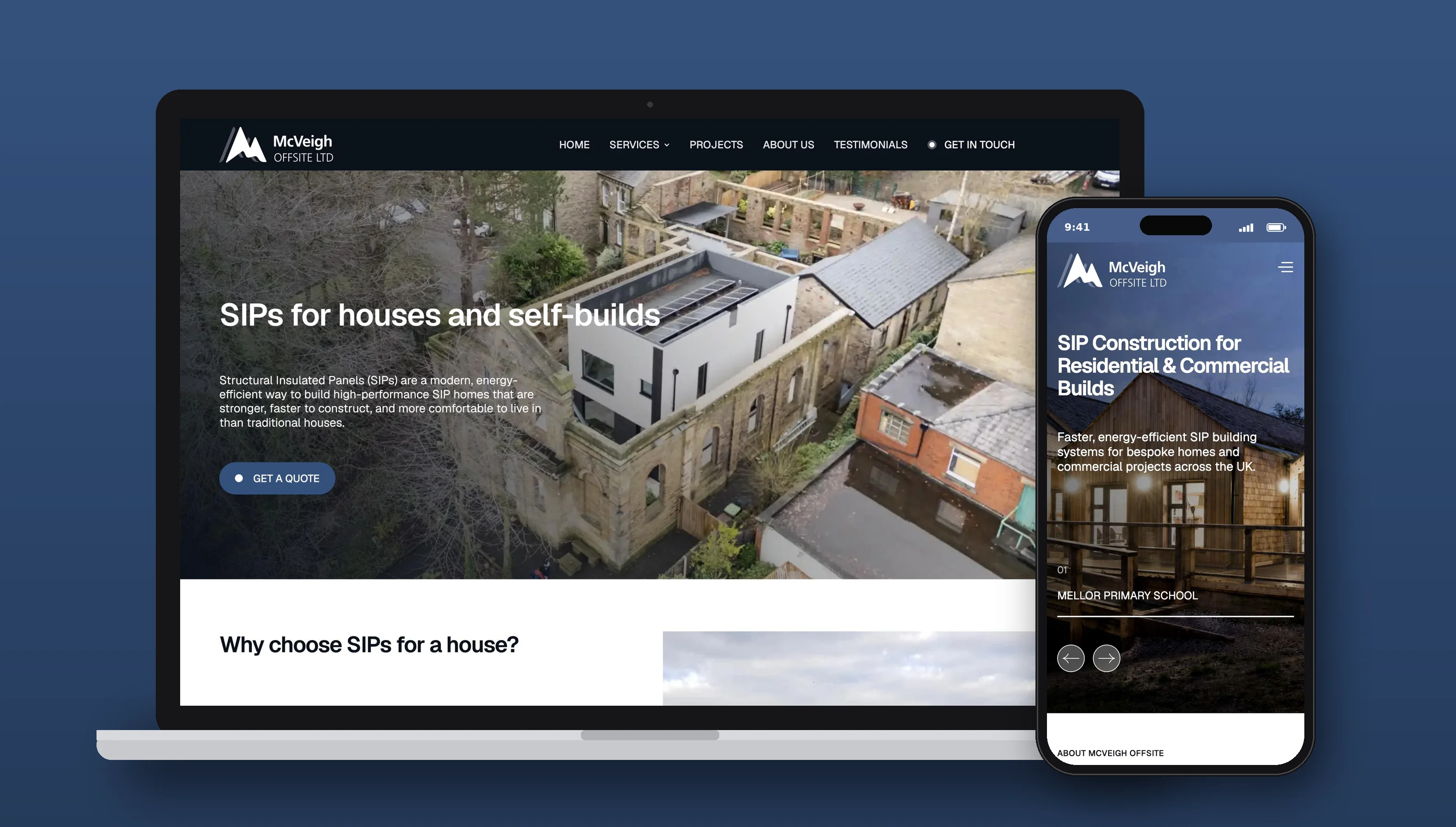
We take this approach with specialist contractors including Trace Basement Systems, McVeigh Offsite, Sinewave EV charging and Craft Bespoke Joinery. For Trace, improved UX, content and SEO attracted higher-value projects and number one rankings for key search terms. Across construction more widely, a CRO and UX redesign lifted JCB's new machine enquiries by 66%.
How Higher Ground can help
Higher Ground is a UX and CRO consultancy with more than 25 years' experience. We help specialist contractors, subcontractors and home improvement firms turn website visitors into qualified enquiries, working across the UK, including the South West.
- CRO audit: we review your enquiry journey against real visitor behaviour and give you a prioritised list of fixes.
- New website: a Webflow site built around both routes to work, with ongoing CRO, UX and SEO support from £750 a month.
- Ongoing CRO: testing and improving the pages that turn into site visits, tenders and signed jobs.
See how we work with construction firms on our construction marketing page.
Want more of the right enquiries in 2027? Get in touch and tell us how your leads come in today.
Sources
- Devon and Torbay Local Growth Plan 2025–2035, Devon and Torbay Combined County Authority
- Notice of approved Boiler Upgrade Scheme grant values from 21 July 2026, GOV.UK
- Boiler Upgrade Scheme, Energy Saving Trust
- Warm Homes Plan guide for installers, Reonic
- Boiler Upgrade Scheme 2026 changes for installers, Autarc
- Record 60,000+ MCS heat pump installations in 2025, GOV.UK
- The Warm Homes Plan is delivery-constrained, Payaca