.svg)



The best CRO agencies do more than analyse conversion data. They understand how the business makes money, identify which customer problems have a genuine commercial impact and design practical improvements that teams can implement.
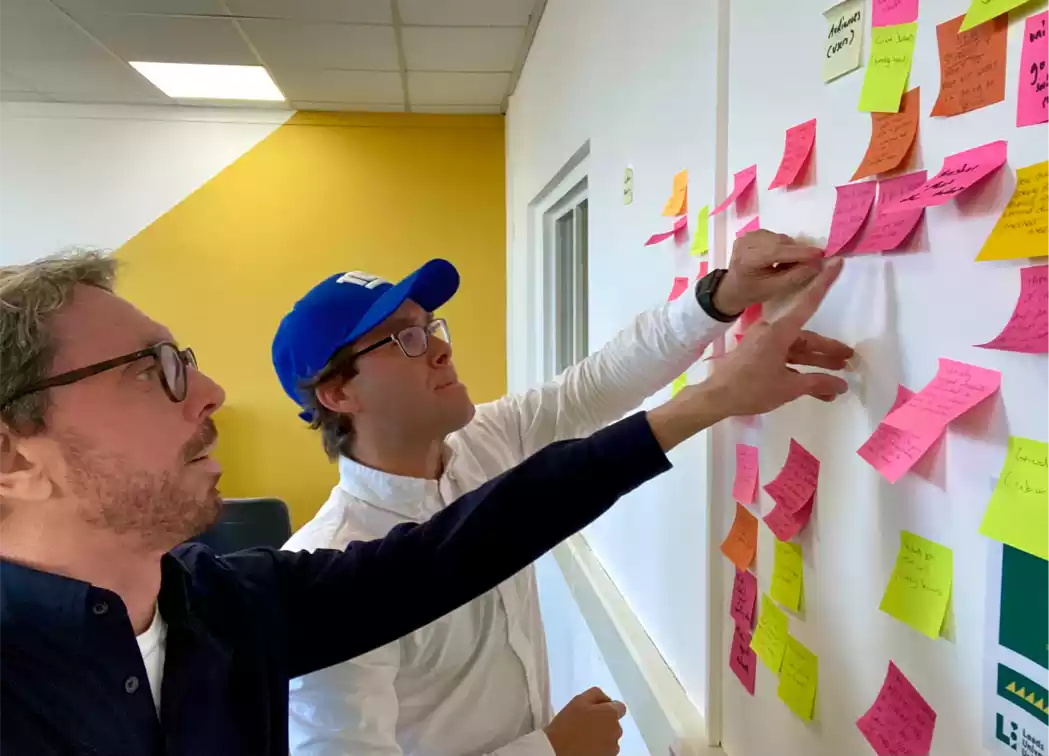
Many CRO specialists can identify where customers leave a website. Fewer have the UX expertise to design the improved journey needed to solve the problem.
Higher Ground does both.
We use data to find the problem and UX design to solve it.
What should a good CRO agency understand?
Before recommending changes, a CRO agency should understand:
- How the business makes money
- Which products and customer groups matter most
- What a valuable conversion looks like
- Where customers experience friction
- What internal teams can realistically deliver
An increase in form submissions is not valuable if the enquiries are poor quality. A shorter journey is not better if it removes information customers need to make a confident decision.
The goal is not simply to increase a number in Google Analytics 4. It is to improve the customer experience in a way that supports revenue, engagement and wider business priorities.
“Conversion data without business context is just a number. We need to understand what the business and its customers are trying to achieve.”
Rob Hufton, Higher Ground
How should CRO agencies use data?
Analytics can show what customers are doing, but it rarely explains the whole problem.
GA4 might reveal that customers are leaving a product page or abandoning a form. CRM, ecommerce and customer service data can then provide valuable commercial context.
However, tracking is not always accurate. Different platforms can report different results and important interactions may happen over the telephone or through offline sales teams. It's often much more practical to use interaction tracking data from platforms like HotJar.
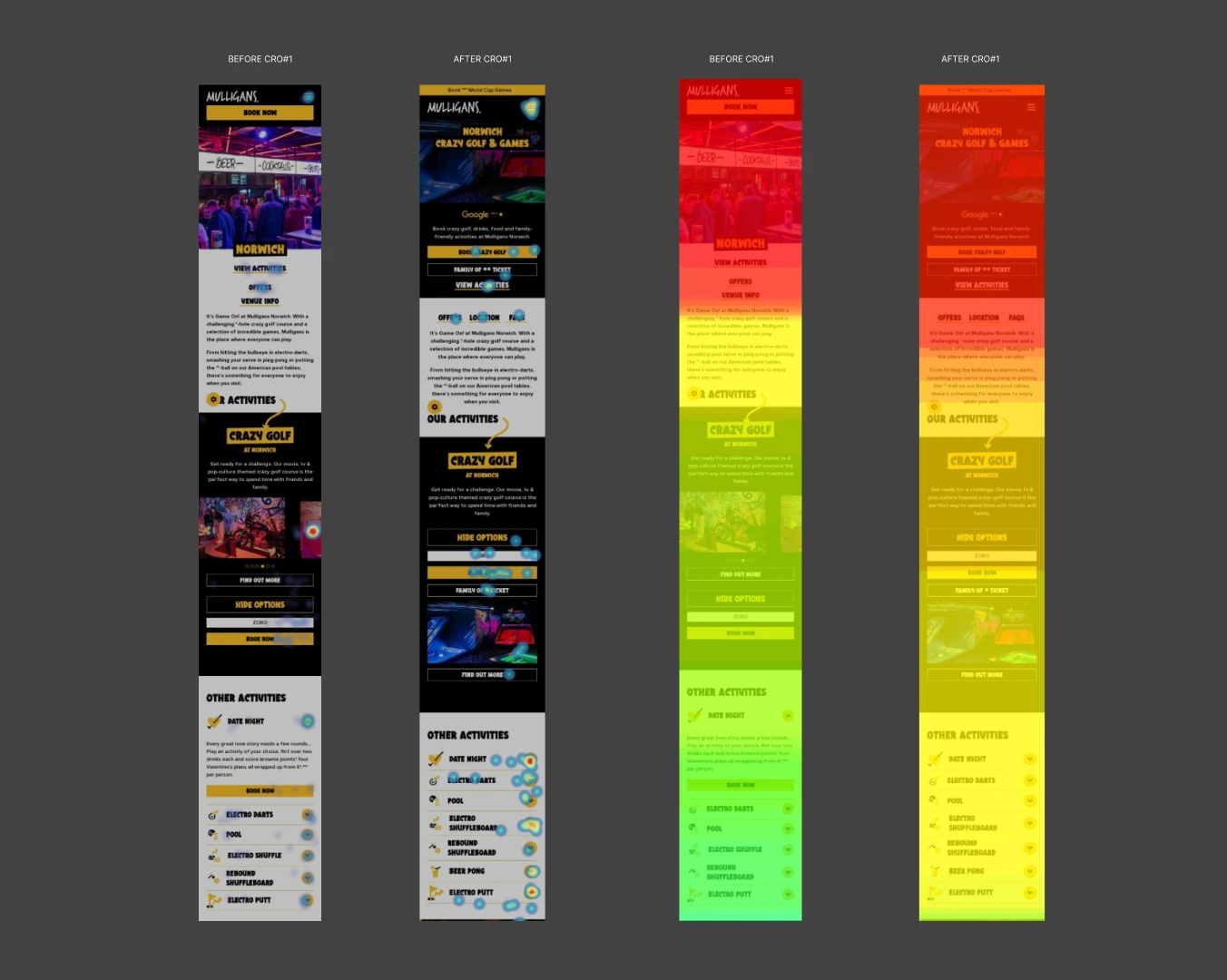
That is why we compare several sources of evidence rather than treating one dashboard as the absolute truth.
As UX consultant Paul Boag explains:
“However, the data is not enough. We need to introduce a variety of types of qualitative research too.”
Paul Boag
Paul’s wider point is important: quantitative data helps us understand what people are doing, while qualitative research helps explain why.
Good CRO decisions are evidence based, not dashboard led.
How we use Hotjar
Hotjar is one of the main behavioural analytics tools we use during UX and CRO projects.
Its session recordings allow us to watch how real visitors move through a website. We can see customers hesitate, repeatedly click, overlook important information, encounter errors or abandon a journey.
Heatmaps provide a broader picture of where visitors click, move and scroll.
For example, GA4 might show a high exit rate from a product page. Hotjar might reveal that customers are repeatedly opening the same information, struggling to understand an option or clicking something that does not work as expected.
GA4 shows us where customers leave. Hotjar helps us understand why.
Neither tool provides the complete answer independently. We combine their evidence with customer feedback, business priorities and established usability principles.
Why UX design and CRO belong together
Some CRO specialists focus mainly on analytics, testing and recommendations. They may identify a conversion problem but lack the UX design expertise to create the improved experience.
Some UX designers take the opposite approach. They may produce a polished journey without connecting it closely enough to conversion, revenue or implementation constraints.
Higher Ground combines both disciplines.
We analyse the evidence, identify the likely cause of customer friction and redesign the experience through customer journeys, wireframes and prototypes.
Instead of saying “simplify the checkout”, we show how it could work.
Instead of saying “clarify the value proposition”, we develop a clearer structure and message.
Instead of producing another list of usability problems, we design practical solutions.
Steve Krug captures the principle neatly in Don’t Make Me Think:
“If you can’t make something self-evident, you at least need to make it self-explanatory.”
Steve Krug
Finding the problem is only half the job.
What happens when the data is unreliable?
Real businesses rarely have perfect data.
GA4, Salesforce and ecommerce platforms may report different results. Events can be missing, attribution may be unclear and different teams can interpret the same data differently.
A CRO project should identify these limitations without becoming paralysed by them.
We establish which evidence can be trusted and compare it with Hotjar recordings, customer feedback, sales insight and recognised usability principles.
Where the evidence is strong, we use it. Where it is incomplete, we explain the assumptions being made.
Imperfect data does not prevent sensible decisions.
Sometimes further research or testing is necessary. Sometimes the problem is already sufficiently clear to make a practical improvement. Experience helps us recognise the difference.
How should CRO recommendations be prioritised?
A CRO audit can easily produce dozens of recommendations. The challenge is deciding what should happen first.
We consider:
- Likely commercial impact
- Importance within the customer journey
- Strength of the evidence
- Number of customers affected
- Implementation effort
- Technical and operational constraints
Obvious usability problems should not sit behind months of analysis simply because they have not been confirmed by an A/B test. Equally, expensive changes should not be recommended without sufficient evidence.
The result is a roadmap that separates immediate improvements, design opportunities, analytics requirements and longer term experiments.
Fix what matters. Test what is uncertain. Measure what changes.
Practical design, not another audit presentation
Many UX and CRO audits finish with a lengthy presentation explaining what is wrong.
This still leaves the internal team to interpret the recommendations and design the solution.
Our engagements can include redesigned customer journeys, wireframes and prototypes for the most important opportunities. These give Product, Marketing and Engineering something tangible to review.
The purpose is not to redesign everything. It is to make the highest priority recommendations clear and ready to progress.
Recommendations create discussion. Designs create momentum.
Working in house with your team
Higher Ground can work remotely, in house or through a combination of both.
Working in house is particularly effective when time is limited or a project involves several departments and systems. We sit alongside the relevant people, ask questions as they arise and quickly understand what is commercially and technically possible.
This may involve focused conversations with:
- Product about priorities
- Engineering about platform constraints
- Marketing about acquisition
- Sales about lead quality
- Customer service about recurring problems
- Senior stakeholders about commercial objectives
These conversations do not need to become lengthy workshops or formal agency presentations. We share work as it develops, agree the direction and resolve questions while the right people are available.
The right conversation at the right time can save a week of research.
We work closely enough to understand the business but independently enough to question assumptions. The same approach works remotely through short calls, access to the relevant evidence and regular design reviews.
Fewer meetings. Shorter presentations. More progress.
What should a CRO and UX audit deliver?
A useful audit should provide more than observations.
Depending on the engagement, our output can include:
- Analysis of priority B2B and B2C journeys
- Review of GA4, Hotjar and other available evidence
- Identification of customer friction
- Commercial assessment of each opportunity
- Prioritised recommendations
- Redesigned customer journeys
- Wireframes or prototypes
- Guidance for Product and Engineering
- Recommendations for measurement and testing
The final roadmap should explain what needs to change, why it matters and what the organisation should do next.
Choosing the right CRO agency

When comparing CRO agencies, ask whether they can:
- Understand your commercial priorities
- Analyse GA4 and behavioural tools such as Hotjar
- Work sensibly with incomplete or conflicting data
- Design improved customer journeys
- Work constructively alongside internal teams
- Prioritise recommendations by commercial impact
- Produce solutions that can actually be implemented
A CRO agency should not simply generate more data, meetings or presentations.
It should help the business make better decisions and turn those decisions into a better customer experience.
UX design and CRO in one place
Higher Ground combines UX design, CRO, analytics and more than 25 years of commercial digital experience.
We use GA4, Hotjar, customer insight and business knowledge to understand what is affecting performance. We then design clearer experiences that teams can review, test and implement.
We can work remotely or sit alongside your Product, Marketing and Engineering teams in house.
No unnecessary process. No long winded presentations. No agency fluff.
Just practical, evidence based improvements designed around your customers and business priorities.